
Staying Healthy with the Onslow Experts
Monday 5th October 7.45 – 9.30pm
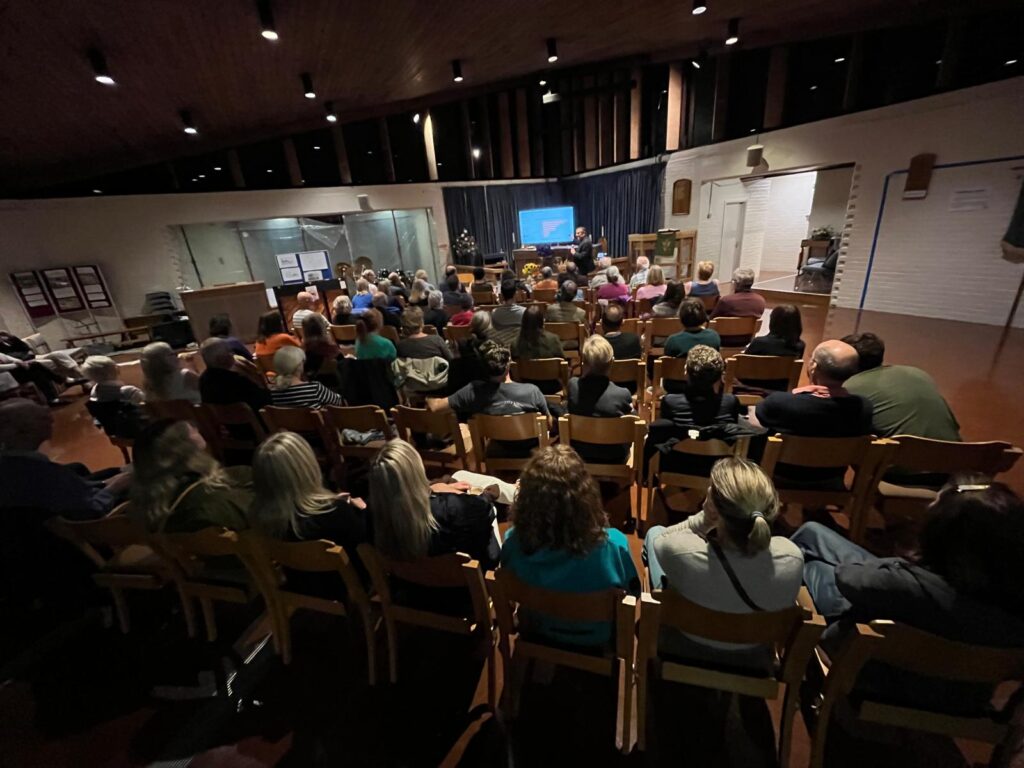
This was another well attended event with 65 people coming along to listen to our local experts give us top tips on Sleep, Nutrition and Exercise. Below are comprehensive reports of the three talks if you weren’t able to make it, or you need a recap of what was said!

The Value of Sleep
A report of the talk given by Derk-Jan Dijk
People value good sleep; it makes the headlines in the media and it tops the Sainsbury’s chart of factors that enable us to live well. In fact, Derk-Jan likes to swap the usual , ‘How are you?’ for, ‘How did you sleep?’ because he feels it gives him a far clearer picture of someone’s well being.
Derk-Jan is a professor of Sleep and Physiology and the University of Surrey and the head of the Surrey Sleep Research centre, situated next to the University’s sports fields, a short walk from Onslow Village. It is a fully equipped sleep research facility that enables scientists to study every detail of a participant’s sleep.
Derk-Jan started by addressing the question ‘What makes a good nights sleep?’. It is commonly understood that our sleep cycles through several different phases during a single night. These cycles may include short awakenings, periods of Rapid Eye Movement (REM sleep) and the 3 phases of Non-Rem sleep with one of these being Deep Sleep.
Interestingly, the research shows that participants report a good nights sleep not when they have had lots of ‘Deep Sleep’ but rather when they have had lots of ‘REM sleep’. This is particularly pronounced in women. Whilst ‘Deep Sleep’ is the time when the body focuses on physical restoration, ‘REM Sleep’ is all about emotional, mental and cognitive restoration. Perhaps it is not surprising that REM Sleep results in us waking up feeling refreshed – it’s our over-night therapy session! Bad sleep is reported when lots of awakenings have been recorded, so sleep continuity is important.
Much of the research at the centre is funded by The Dementia Research Institute since disrupted sleep and abnormal circadian rhythms are very prevalent in people with dementia and are a strong predictor of cognitive decline. They also contribute significantly to the burden on the caregiver and it is often this factor that leads to the loss of independent living. It has been shown clearly that when sleep quality can be improved in those suffering from mild cognitive impairment and Alzeimers, it is followed by better waking function. It is hoped that by understanding the long-term sleep behaviour related to dementia life improving interventions can be developed.
Recently the scientists at the sleep centre have been assessing the ability of sleep trackers to measure sleep. They have tested examples of all the different sleep trackers currently on the market including wearables (for the wrist, head and ear), sleep mats and even radar emitters that sit on your bed-side table. They have discovered that they are all good at monitoring how long you spend in bed (and interruptions of the in-bed period), and your heart rate and your breathing rate. But none of them, despite their claims, are good at measuring the different stages of sleep such as REM or Deep Sleep.
Derk-Jan went on to consider the amount of sleep people get and the consequences of sleep deprivation. In 2022 a survey asked 2500 people how many hours they slept on an average night. 35% said they slept for 6 hours or less, 35% slept for 7 hours, 20% slept for 8 hours and the remaining 10% slept longer than 8 hours. To investigate the impact of sleep deprivation the team at the sleep centre studied 36 healthy volunteers. For one week the participants spent 10 hours in bed every night (on average sleeping for 8.5 hours), then for one week they were given just 6 hours in bed (on average sleeping for 5.7 hours). At the end of each week they took samples of blood from the participants and analysed the ‘genes’. They discovered significant differences, with some genes being down regulated and others upregulated in those with insufficient sleep. Most notable were changes in the genes related to stress responses and immune responses.
In a related study scientists compared the duration of people’s sleep with their susceptibility to contracting the common cold. Under controlled conditions it was found that the people who had less than 7 hours of sleep were 3 times more likely to be infected and show signs of illness than those who had had more than 8 hours of sleep. Clearly insufficient sleep has a negative impact on people’s immune system.
In the final part of the talk Derk-Jan considered Age, Ageism and Sleep and asked the question ‘Are older people sleepy people?’. The answer was a resounding ‘No’. When asked to self-report on how alert/sleepy they felt on a 9 point scale, it was the 20 – 29 year olds who reported feeling most sleepy and who fell asleep most quickly in day time naps. They were followed by the 30 – 39 year olds, then the 40 – 49 year olds. The 50 – 59 year olds reported being the least sleepy, with people over 59 being only slightly more sleepy, and considerably less sleepy than the 40 – 49 year olds. Without doubt it is the young who have the biggest sleep deficit, since they both need more sleep than older people and yet they tend to spend less time in bed.
It is estimated that the annual cost of insufficient sleep in the UK is $50 billion.
Derk-Jan’s parting message was to take sleep seriously, but not too seriously!
At the end of the talk members of the audience were invited to ask questions:
What are your tips for getting a good nights sleep?
Go to bed at a sensible time, get up at a sensible time, don’t drink coffee and alcohol before you go to bed. Get outside and exercise during the day. But most importantly, prioritise sleep!
I sleep for 5 hours, then wake up for 1 – 2 hours then sleep for 2 or 3 more hours. I wake up feeling refreshed. Is this 2 phase sleep pattern a problem?
No. Two blocks of continuous sleep is absolutely fine.
I work shifts and am finding the night shifts considerably harder now, in my forties, than I did in my twenties. Is this normal?
Our bodies are not designed for night shifts however they are an unavoidable part of our lives. Usually people find shift work harder as they get older because they find it harder to sleep during the day, thus they struggle to replenish their lost sleep. It is important to try to prioritise the day time sleep, although naturally it does get harder with age.
Do teenagers need more sleep and so should we be trying to get them out of bed in the morning or should we leave them to sleep?
When children reach adolescence they do naturally sleep a little more and they naturally prefer to shift their wake time to later in the day. However this later bed time is now being exacerbated by smart phones and social media etc. and teenagers are simply not getting enough sleep. Parents would do far better putting their energies into getting teenagers into bed earlier, rather than getting them out of bed earlier. However, yes, let them sleep in when they can if they haven’t had enough sleep during the week. The amount of sleep you get over 7 days is probably the most important thing.
The Amazing Journey Through Your Gut
A report of the talk given by Joanna Abel
Joanna is a Nutritional Therapist, based in Guildford. She is passionate about helping people feel better in their bodies through improved gut health, more stable energy and a healthier relationship with food. Her approach is always individual, practical and food-first, looking at the bigger picture rather than simply focusing on one symptom.
The digestive system is a food-processing factory. There are different departments which have different jobs. We are going to follow one mouthful of food as it goes on its journey through the factory.
Stop 1: The mouth – Chop. Mix. Start. In the mouth the food is chewed and mixed with saliva. This makes the food easier to swallow and gives it a larger surface are on which the enzymes can work. The saliva contains enzymes that begin breaking down carbohydrates.
Stop 2: The stomach – The Mixing Bowl. The stomach stores food temporarily, whilst churning and mixing it with stomach acid and digestive enzymes. One of the jobs of the stomach acid is to kill the many microbes we swallow, whilst the enzymes begin protein digestion.
Stop 3: The small intestine – The Absorption Station. The small intestine is a long, highly folded muscular tube, about 6m in length. It’s internal service is covered in tiny finger-like projections called villi that make it the perfect absorption surface. This is where most of the carbohydrates, proteins, fats, vitamins and minerals are absorbed.
Stop 4: The large intestine – The Final Processing Department. This is a large muscular tube of about 1.5m. Its jobs include absorbing water, forming stool and moving waste towards the exit. And this is where our roommates live….
For we are not alone – our gut is home to TRILLIONS of microorganisms.
Our gut is home to a huge community of microorganisms, most of which are in our large intestine. The main players are bacteria, but fungi are present in much smaller numbers and there are viruses including bacteriophages that interact with bacteria.
These gut microbes aren’t just sitting there, they’re interacting with their environment and with us. They are:
- Breaking things down – using nutrients and compounds that we can’t digest ourselves but getting them to a form that we can then absorb and use.
- Making metabolites – producing unique compounds that can affect the gut and the wider body
- Supporting the gut environment – interacting with the gut lining and immune system to help them work effectively
- Communicating – sending and responding to chemical signals
- Competing with each other for space and resources – helping to shape which microorganisms can thrive
Like any ecosystem, the environment matters. What we eat, our lifestyle, illness, medications and other factors can all influence the gut and therefore which microorganisms thrive and what they do.
When the environment changes, the community changes. Some microbes may increase while others decrease thus changing the balance of the ecosystem. Their activity will also change depending upon which nutrients are present.
Over recent years it’s been discovered that the gut is communicating with the brain far more than we previously realised. There are huge numbers of nerves going from the gut to the brain, including the vagus nerve. Whilst we know this is a two-way conversation – think butterflies in your tummy when you’re feeling nervous, and how life events can change your appetite – there are actually 5 to 9 times more nerves taking messages from your gut to your brain, than taking messages from your brain to your gut! In addition there are hormonal messages going from your gut to your brain and even compounds made by the microbes in your gut are communicating messages to your brain. It is important that our gut sends positive, safe messages to the brain and this is affected by what we eat.
What we eat can affect:
- Our digestion: how food is broken down and absorbed
- Our bowel movements: how easily food moves through the gut
- Our gut microbes: the foods that reach them help shape which microbes thrive
Common signs that your gut might need some attention are:
- Bloating and excess wind
- Constipation or diarrhoea
- Tummy pain or discomfort
- Changes in your usual bowel habits
- Food-related symptoms or feeling uncomfortable after eating
Your gut can give you clues when something else in your body isn’t quite right.
There are 3 simple ways to look after your gut which we will look at in more detail:
1. Variety
Eat a variety of plant foods, not just the same two vegetables every week.
2. Fibre
Make fibre a regular part of your diet
3. Fluids
Water and other fluids help keep things moving and support normal bowel function
1. Variety
Try to include a variety of plant foods from these four groups daily:
Beans, pulses and lentils
Wholegrains – eg. wholegrain pasta, wholegrain bread
Fruit and vegetables
Nuts and seeds
2. Fibre
Whilst all fruit and veg are good sources of fibre some contain more fibre than others. Those that are lower in fibre are things such as grapes, courgette, spinach and all peeled fruit and veg (particularly if they are then boiled until very soft). Try to leave skins on potatoes, carrots and fruit whenever possible since this not only gives extra fibre but the skin is often where the healthy nutrients are found.
Fruit and veg which are high in fibre include berries, particularly raspberries and blackberries, Kiwi fruit, unpeeled pears and apples, broccoli, peas and sweet potatoes.
Good sources of fibre which are particularly good for feeding our gut microbiome (known as prebiotic foods) are leeks, onions and garlic.
The NHS recommends that adults eat 30grams of fibre a day. This can be harder than you might expect. The following portions if eaten in one day would provide 30grams of fibre:
100g of black beans – 9g of fibre
200g of sweet potato – 5g of fibre
2 kiwis – 4g of fibre
75g of raspberries – 5g of fibre
20g of chia seeds – 7g of fibre
If you need to increase your fibre intake it is recommended that you do it fairly gradually adding just 5g extra each day for one week, and then adding another 5g each day for the next week etc. Your gut microbes need time to adapt. A sudden increase in fibre can mean more fermentation and may cause bloating, wind or abdominal discomfort. You can add 5g of fibre by eating for example; a pear, or half an avocado, or 30g of almonds, or 40g of oats, or 100g of lentils. Chia puddings have been a popular way of adding fibre to peoples’ diets. Add 2 tablespoons of chia seeds to yoghurt or milk and let it soak for at least 2 hours (you can keep it covered in the fridge for about 5 days), then add berries to it and eat it as a healthy, fibre-filled pudding. However be aware that chia seeds and flax seeds need to be soaked or ground before the body can use them. They have hard outer casings which mean they will go straight through the gut unchanged if the casing hasn’t been softened by soaking or broken open with grinding.
It is important to remember to drink enough fluids as you increase your fibre.
You may want to start checking the labels on the products you buy in the supermarket to check how much fibre they contain. Look for products that have at least 1g of fibre for every 10g of carbohydrates.
3. Fluids
Fluids are an important part of our health, 55 – 60% of our body mass is water. Our digestive system needs water at almost every stage. We need water to make our saliva, the digestive juices, bile and pancreatic juices. Fibre also absorbs water which helps keep stools softer and easier to pass. It’s important to think of fibre and fluids as a team, the more fibre you eat the more fluids you need to take on.
So to conclude, our gut-health is closely linked to our health and wellbeing. To keep our guts as healthy as possible we need to eat a wide variety of plant based foods including beans and pulses, fruit and vegetables, wholegrains, and nuts and seeds. Fibre is critical in keeping our guts healthy. Aim to eat 30g a day, and if you need to increase your fibre intake, do it gradually. And don’t forget to drink lots of water and other fluids to keep things moving and to support normal bowel function.
Know what is normal for you and speak to your GP if you notice:
- Blood in your poo – red or black
- A change in bowel habit – new diarrhoea, constipation or going more/less often than usual
- Persistent tummy pain or bloating
- Unexplained weight loss
- Unexplained tiredness or breathlessness
- A lump in your stomach.
It is always important to get new or persistent changes checked.
Joanna works with clients to help them make sense of their diet and support their health and wellbeing. This may include:
Dietary assessments and personalised nutrition
Gut health and digestive concerns
Energy, eating habits and everyday wellbeing
Building a healthier relationship with food
Joanna is offering a 10% discount to anyone who attended the talk. Her contact details are below:
Website: joannaabelnutrition.com
Instagram: @joannaabelnutrition
email: info@joannaabelnutrition.com
At the end of the talk the audience was invited to ask questions:
What do you think of meat?
Our teeth clearly show we are designed to eat meat as well as plants and it’s an excellent source of protein and some other nutrients. However a healthy diet does not need to include lots of meat.
What is the difference between a Nutritional Therapist and a Nutritionist?
A Nutritional Therapist does not have as much training as a Nutritionist. Our training enables us to work with private patients but to work in a hospital I would need to do some additional training.
So the chia seeds that I sprinkle on my yoghurt each day probably aren’t doing me any good?
Probably not. Chia seeds (and flax seeds) need to be soaked for at least 2 hours to soften the hard outer coating so that the microbes can make use of the fibre.

Learn one thing, Change one thing, Feel positive about one thing!
A report of the talk by Hannah Hayward
“Never stop learning. If you learn one new thing everyday, you will overcome 99% of your competition” – Joe Carlozo
Hannah Hayward is a personal trainer and fitness instructor with 9 years experience. She is a specialist in Women’s health fitness and does a lot of work with women in peri-and post-menopause. Before transitioning to this career she worked in Advertising.
Hannah can often be seen on the rec running classes in the village. But she works in many different settings. She works with individuals giving personal training and nutrition advice. She runs several group exercise classes and small group training sessions or specialised exercise classes. She runs day retreats and weekend retreats. She also runs community classes for people who find it hard to access exercise classes, and corporate classes provided by employers for their workforce.
Hannah started her talk by showing us a range of items laid out on a chair. She had alcohol, savoury snacks, sweet snacks, vapes and various other naughty but nice things! She asked us, “Which of these will do the most long-term harm to your health?” And the answer…. ‘The chair’! A sedentary lifestyle, without exercise, is one of the most dangerous lifestyle choices you can make. It has been linked to all the big killers, from heart disease to cancers to dementia.
However the good news is exercise can make a really big difference and its never too late to start. Hannah shared with us a message she had received last week from one of her clients. As a result of committing to exercise a client had managed to reverse her type 2 diabetes, in addition to feeling stronger, aerobically fitter and the most toned she’d been in her life!
As with most things there are trends that come and go in fitness training. However one of the latest trends, which Hannah is fully behind is Strength Training. More and more research is coming out to show how beneficial strength training is to overall health and wellbeing.
At this point Hannah got us up on our feet to see how much we knew about strength training. She asked us to indicate whether we thought the following statements were true or false:
Strength training must include weights – False: strength training can be just as effective if you are using your own body weight with exercises such as squats, planks or press ups.
Women get bulky if they strength train – False: It’s pretty hard for women to bulk up, most women simply become toned.
Your bones stop growing by the age of 20 – False: Although our bones don’t get any longer from about 20, they are constantly renewing themselves, with old bone being reabsorbed and new bone being laid down.
An hour of weightlifting a week can reduce the risk of a heart attack – True
Strength training burns more fat than cardio exercise – True
Heavier weights, fewer reps is better than lighter weights, more reps – False: both are equally effective
Strength training can make you look younger – True
Weightlifting is bad for the joints – False: the muscles around your joints become stronger thus protecting them from damage. It also stimulates tissue repair and increases resilience.
So what is strength training and why should we do it?
- Strength training is any form of training that has an element of resistance.
- Strength training builds bone mass meaning your bones become denser and therefore stronger.
- It is beneficial for all ages, but it is particularly important for women during and after menopause as bone density decreases naturally as we age.
- Strength training boosts your immune system.
Diet is key to strength training. It is important to be eating plenty of protein and to be fuelling properly to get the most benefit from strength training.
Strength training can be done using a range of different weights and equipment such as hand weights, bar weights, kettlebells and resistance bands, as well as body weight exercises. However, a great starting point is with functional strength training. This is using everyday opportunities to build up your strength. For example carrying heavy shopping bags, repeatedly sitting and standing, climbing stairs, hill walking.
In addition to the benefits listed above the latest research is also demonstrating exciting links to improved brain function. It has been shown that strength training can trigger neuron growth which improves cognitive function and can actually reverse some aspects of cognitive decline and memory loss. There are also studies that show it can reduce inflammation which contributes to anxiety and depression, as well as, in the short term, boosting mood and reducing stress.
Here are Hannah’s top tips on getting started with strength training:
- Join a class or get a Personal Trainer
- Workout with a friend
- Buy a resistance band and use it regularly
- Set yourself a challenge
- Work at your own pace
- Fuel properly
- Give yourself a break and stay hydrated
- STREEETTCHHHHH
In addition to strength training, it’s also really important to stretch. You can do this anywhere at anytime: at home when you first get out of bed, or when you’re waiting for the kettle to boil, or when you’re sitting on the floor watching TV, and even when you’re at All Saints listening to a talk about exercise! It’s great for releasing knots and pains. It improves circulation, improves flexibility and posture, and lifts your mood whilst reducing stress. We should all be stretching every day!
Hannah runs 5 classes in the village every week, and 2 gym sessions at Guildford County School. If you’re interested in joining one of Hannah’s classes visit her website at:
hhpersonaltraining.co.uk
You can try your first class for free!
Or you can book a 1:1 exercise consultation by calling 07800 505099 or emailing hannahhayward84@gmail.com
At the end of the talk the audience were invited to ask questions:
Does Aquarobics count as strength training?
Whenever there is resistance work it would count as strength training, so yes some of it would be strength training, however some of it would count more as aerobic exercise.
The People’s Emergency Briefing Film
Friday 2nd October 2026 6 – 7.30pm

There was an excellent turn out at this event, with over 80 residents meeting in All Saints Church to watch this hard-hitting film. After the 50 minute film we were invited to discuss with our neighbours how the film made us feel. For many of us this was intense fear, for others it was anger, for other’s it was hope and relief that finally people were beginning to take climate crisis seriously. The film left us in no doubt that we are at a tipping point and if we and the world’s governments don’t act immediately and decisively it may be too late.
At the end of the discussion representatives from different groups in the Guildford area who are already addressing some of the issues introduced themselves. There were representatives from the following groups: HEAT (Home Energy Advice Team), Guildford Community Fridge, River Testing Team and the Guildford Swift Project. More details of all these projects can be found on the ZERO Carbon Guildford website.
If you missed the showing but would like to see the film you can find a local showing by visiting the ‘People’s Emergency Briefing’ website. The film is only available at in-person showings, since the makers want to encourage communities to respond together.
In response to this film members of the Onslow community would like to form a group of like-minded people who will be able to help our village become as sustainable and resilient as possible. Look out for more information in OVRA mailings, or if you would be interested in getting involved with the group please email info@ovra.org.uk .
Here are the main points covered by the film (written by AI)
Why a “Briefing”?
The premise of The People’s Emergency Briefing is straightforward: while military leaders, corporate boards, and national governments routinely receive high-level strategic risk briefings on global crises, the general public rarely gets access to the raw, unvarnished synthesis of current climate science and risk assessments.
The film acts as a high-level executive summary for citizens, stripping away political spin and sensationalism to deliver a clear-eyed assessment of planetary health and community resilience.
The Acceleration of Climate Dynamics
A central pillar of the briefing is that climate change is no longer a distant, linear future projection—it is an accelerating, real-time reality.
- Breaking Safe Earth Boundaries: The film highlights that human civilization developed during a remarkably stable 10,000-year climatic period (the Holocene). Modern industrial activity has driven atmospheric greenhouse gas concentrations well past historical norms, destabilizing global weather systems.
- Extreme Weather as the New Baseline: Floods, prolonged heatwaves, severe droughts, and unseasonal storms are occurring with higher frequency and intensity than earlier IPCC (Intergovernmental Panel on Climate Change) models projected.
- Compound Risks: The film emphasizes that climate impacts rarely happen in isolation. A heatwave can trigger agricultural drought, which leads to crop yield reductions, energy grid strain, and elevated wildfire risks simultaneously.
Tipping Points and Feedback Loops
Perhaps the most critical scientific concept introduced in the film is the danger of climate tipping points—thresholds beyond which a small change in global temperature can push a system into a self-reinforcing, irreversible state of change.
The briefing focuses on several interconnected Earth systems:
- Polar Ice Loss: As Arctic sea ice melts, dark ocean water replaces reflective ice (the albedo effect), absorbing more solar heat and accelerating further warming.
- Permafrost Thaw: Thawing Arctic tundra threatens to release vast quantities of methane and carbon dioxide, adding significant warming pressure beyond human emissions alone.
- Forest Dieback: Major carbon sinks, such as the Amazon rainforest and northern boreal forests, are under combined stress from deforestation, drought, and fire, risking a shift from absorbing carbon to releasing it.
- Cascading Effects: The film explains how pushing one tipping point (e.g., Greenland ice sheet melt) can slow ocean circulation currents, altering weather patterns globally and destabilizing other natural systems in a domino-like cascade.
National Security & Infrastructure Resilience
- Resource Conflict & Geopolitical Strain: How regional water shortages, droughts, and agricultural losses act as “risk multipliers,” triggering global supply shocks, price spikes, and mass displacement.
- Critical National Infrastructure: Nature (forests, soil, coastal wetlands) is framed as critical infrastructure. Pushing these systems past tipping points threatens energy grids, transport links, and flood defences.
Public Health & Healthcare Systems
- Direct Health Threats: The impact of severe heatwaves, air pollution, and changing weather patterns on cardiovascular and respiratory illness.
- Emerging Disease & Systemic Strain: The spread of vector-borne diseases into new regions and how compound environmental events threaten to overwhelm NHS emergency capacity.
Food Systems & Ecological Breakdown
- Breadbasket & Soil Security: Industrial soil degradation and extreme weather threaten global and domestic crop yields.
- Biodiversity & Pollinator Decline: The rapid drop in insect and pollinator numbers directly undermines agricultural stability and natural ecosystem resilience.
- Tipping Points: Accelerating feedback loops—such as polar ice loss and thawing permafrost—that risk locking in self-reinforcing warming.
Economic Costs vs. Community Solutions
- The Cost of Inaction: The escalating economic drag of repairing disaster damage compared to investing early in adaptation.
- Grassroots Action & Local Resilience: Rebuilding local food networks, restoring habitats, and fostering neighbourhood support networks so communities can adapt effectively.
Direct Calls to Action for Citizens & Communities
At the local level, the film urges viewers to move away from isolated individual habits and focus on collective impact:
- Host & Spread Screenings: The single primary grassroots recommendation is for individuals to organize screenings in their own villages, workplaces, faith groups, or clubs. The goal is to reach beyond the typical “environmental bubble” and build a critical mass of informed citizens.
- Engage Elected Officials Directly: Residents are urged to invite their local MP, parish, and unitary councillors to a screening. The film emphasizes holding leaders accountable to the scientific evidence rather than short-term political cycles.
- Build Local Resilient Infrastructure:
- Support and expand local food production (allotments, local farm networks) to guard against supply chain disruptions.
- Protect and restore native biodiversity (creating wildlife corridors, restoring wetlands) as critical flood and temperature defences.
- Establish neighbourhood support networks for extreme weather events.
- Shift Consumption Patterns: Accelerate the transition to plant-forward diets (reducing meat and dairy consumption) and significantly cut energy waste through home insulation and low-carbon travel (walking, cycling, public transport). Move to clean energy with solar panels heat pumps and wind turbines.
2. Strategic Demands for Policy & Systemic Change
On a national level, the film calls for a fundamental shift in how risk is communicated and handled:
- A National Televised Emergency Briefing: Demand that the government (or trusted, independent scientific experts) deliver a prime-time, national TV briefing on climate and nature risks—similar to the public health briefings used during national emergencies—so the entire population receives clear, unvarnished facts.
- Treat Nature as Critical Infrastructure: Formally classify healthy ecosystems—soils, peatlands, forests, and rivers—as vital national infrastructure necessary for food security, clean water, and defence.
- Accelerate Carbon Reductions: Reject slow timeline targets (like Net Zero 2050) in favour of rapid, immediate cuts to fossil fuel reliance aligned with strict carbon budgets.
Onslow Open Gardens 2026
Sunday 28th June 2 – 5pm
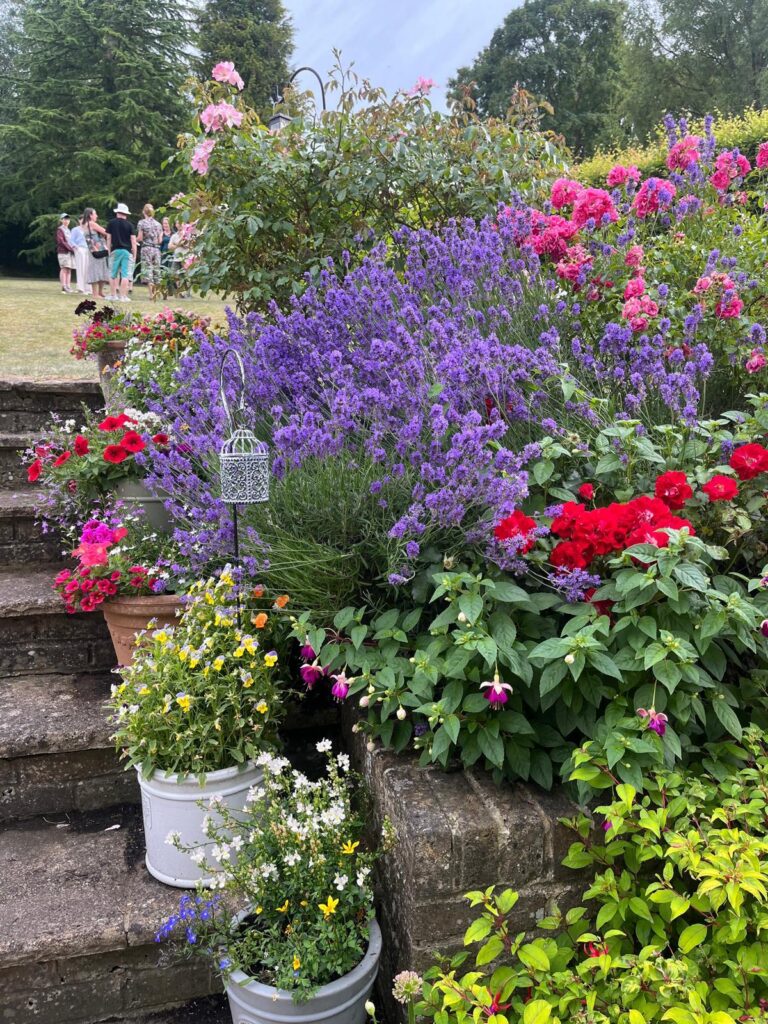
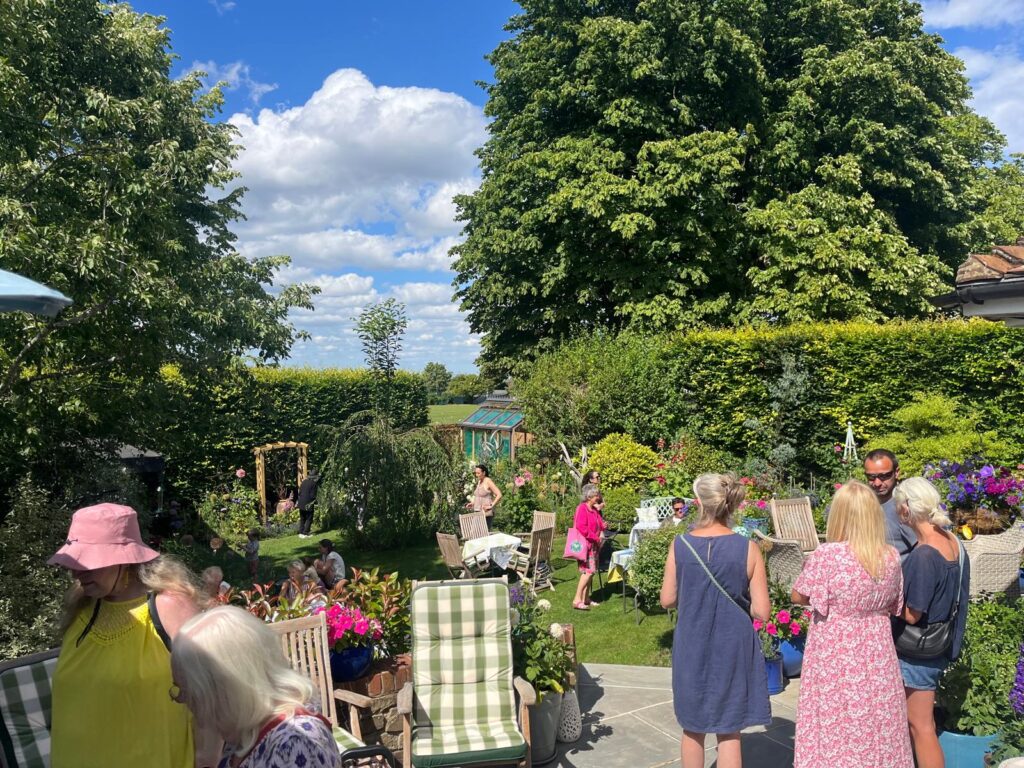
A huge thank you to the gardeners of Manor Way and Abbots Close for opening their gardens for this, our second Open Gardens event. Over 200 people visited the 9 gardens and the plant stall and it was a fantastic community event. The event was jointly organised by OVRA and Onslow Village Garden Club and we raised £1200 to be split between the two groups. We must give special thanks to Linda Falkner who not only recruited our gardeners but also hosted the tea garden so beautifully!
Screaming Swifts and Hedgehog Highways: How we are helping wildlife in Onslow Village
Sunday 7th June 2 – 5pm

It was fantastic to see around 45 residents gather for our latest OVRA/All Saints Eco Group collaboration. The afternoon talk in All Saints Church offered a double-bill of local conservation updates: a fascinating dive into the lives of swifts, followed by a look at how our local hedgehogs are faring.
If you weren’t able to make it—or if you just want a recap of what was covered—here is a taster of what we learned, along with ways you can get involved.
Part 1: The Incredible Lives of Swifts

Our first speaker was Sarah Davis from Guildford Swift Project, who gave us a fascinating 45-minute talk about these remarkable birds.
Did you know that swifts belong to the Apodidae family, which literally translates to “no legs”? While they often get confused with swallows or martins they are not related to them at all, with their closest cousins being hummingbirds! Their ‘no legs’ name comes from the fact that they cannot perch like other birds; instead, their feet are designed purely to let them hang vertically on rock faces and tree trunks.
In fact, swifts spend almost their entire lives airborne. They eat, sleep, and can even mate on the wing! The only time they really stop flying is when they are nesting and raising their young. Unlike most other small birds that fledge in about 3 weeks it takes 9 weeks before swifts are ready to leave the nest. This is understandable considering once they leave the nest they will probably be flying for the next 2 to 3 years without landing!
Local Challenges & How We Can Help
Swifts migrate to the UK from Africa each year for just three months, usually arriving towards the end of April or May and leaving in July or August. They return to the exact same nest site with the same mate each year. They don’t start breeding until their fourth year, but on average they live for about 9 years although they can live as long as 18 years.
They spend the majority of their year in sub-saharan Africa where they feast of insects, but have to come further North to breed. Their eggs and chicks can go into a state of torpor for a few days if if gets too cold or if the parents have to go out for extended food gathering trips when insects are scarce in wet weather (sometimes travelling over 200 miles before returning to the nest), but the chicks and eggs can’t cope with very hot temperatures.
While they originally nested in tree hollows and cliffs, modern swifts rely heavily on the nooks and crannies in man-made buildings. Unfortunately, as modern building practices close up these gaps, swift numbers are plummeting due to a severe lack of nesting sites. It is estimated that the number of breeding pairs of swifts in the UK has dropped by about 70% since 1995.
Sarah shared a few ways we can help them:
- Install Swift Boxes: You can easily add retrofitted swift boxes to the exterior of your home. Because swifts like to live in colonies, it’s much more effective to put up several boxes on one house or coordinate with your neighbours and have several boxes in one stretch of road. They’re unlikely to use the nest box if yours is the only one in the area.
- Incorporate Swift Bricks: If you are building a 2 storey extension or a new property, you can incorporate specially designed “swift bricks” directly into the brickwork. In Scotland legislation has just been passed which means all new build properties should include a swift brick.
- Plant flowers to attract more insects: Swifts feed on insects and as the insect population is declining due to the use of pesticides and habitat destruction this is another reason for the decline in swift numbers. Any plants that use insect pollinators will be good for swifts, who will eat any flying insects.
- Rescue grounded swifts: Occasionally swifts get grounded. This might be due to a fight with another swift, or because of exhaustion or dehydration after their long migration – some birds will do the 5000 km journey in just 5 days. Because their legs aren’t designed for standing it is impossible for a swift to take off again from the ground. If you come across a grounded swift do not try to throw it into the air. This doesn’t work and they often get injured on landing. Instead make a nest for it with an old towel in a shoe box (remember to put lots of holes in the lid to let air in) and contact your local swift rehabilitation group. Click here for contact numbers.
Get Free Help: Guildford Swift Project is offering free installation of swift boxes! If you contact them, they will tell you whether your home is suitable and they will put up any box you purchase from them for free. Swift boxes bought from the Guildford Swift Project currently cost £45 each. You can reach them directly via their Facebook page – https://www.facebook.com/guildfordswiftproject or email them on swift2saveswifts@gmail.com . They hope to be launching their website towards the end of the year.
Swift boxes mustn’t be put up on south facing walls because they can overheat. They must also be over 5m from the ground and must have a clear route in, without surrounding trees.

Earlier this year several houses in Ellis Avenue had swift boxes installed. They are also playing a recording of swift ‘screams’ to attract the swifts in. Whilst there have only been 2 swifts seen flying over Onslow Village this year they have already started to show some interest in the boxes. Since the breeding adults go back to the same nests each year these birds are likely to be the younger swifts who will start breeding next year but who are already looking for potential nest sites. Swifts have a very tight window of opportunity for breeding. They are only in the UK for about 14 weeks, it takes 3 weeks for the eggs to hatch and another 9 weeks for the chicks to fledge, so they don’t have time to be finding a new nest site and building a new nest each year.

We will keep you updated on the progress of these boxes and meanwhile we’d love to hear from anyone else who currently has a swift box on their home or who is planning to get one in the future. We would like to make Onslow Village swift friendly as well as hedgehog friendly!
We will be creating a new page on this website under the Local Initiative tab (below the Hedgehog Highways page) where people can find links to other useful information regarding swifts and we will keep people up to date with any swift news!
Part 2: Hedgehog Highways Project Update
Next, Jo Rew took the floor to give us a progress update on our Hedgehog Highways project, which launched last year.

Jo shared the data collected from last year’s tracking efforts. The project utilized special footprint monitoring tunnels to log hedgehog activity from April through to October. Interestingly, the data showed that despite the tunnels being in use all summer, footprints and live sightings were only reported during April and May.
This year, sightings have been noticeably lower, with only one live hedgehog reported so far. However, there is an important caveat: last year, several people only discovered they had hedgehog visitors because they used the monitoring tunnels. Due to a shortage of volunteer manpower this year, we haven’t been able to lend the tunnels out, which is perhaps making numbers appear lower than they actually are. But even so last year 13 live sightings were reported in April and May, as opposed to only 1 sighting this year.
Insights from Surrey University

We were also joined by Dr. Tara Pirie, an ecology lecturer from the University of Surrey, who has been leading hedgehog monitoring projects on the university campus and who launched the project with us last year. Tara is actually leaving UniS this summer to take up a position in Chester, but she hopes the work she has started on the Stag Hill campus will continue and with it our collaboration with the university.
While Dr. Pirie noted that it’s difficult to pinpoint the exact reason for the lower numbers this season, she is excited about the data we are collecting. She strongly urged us to keep tracking and reporting our findings to the national database, as community science is vital for monitoring hedgehogs across the country.
Tara closed by reminding us of the serious environmental threats hedgehogs face and encouraged everyone to keep making small adjustments to their gardens to create safe havens.
A full list of tips on how to make your garden hedgehog-friendly, from cutting hedgehog highways in your fence to safe gardening practices, can be found on the Hedgehog Highways page on this website.
The afternoon wrapped up with a lively Q&A session after both talks, which spilled over into plenty of friendly chat over tea and refreshments. Thank you to everyone who attended, and a huge thank you to Sarah and Tara for sharing their expertise!

Hustings for West Surrey Unitary Authority Elections on 7th May 2026
Tuesday 28th April 2026

We had a very good turn out at the Hustings Event on April 28th. All but one of the candidates standing for election were present. There were representatives from Reform, Liberal Democrats, Green Party, Labour and the Conservative Party.
After an initial 5 minutes per party to introduce themselves we moved into a time of questions. A wide range of topics were covered, from the inherited debt to safe spaces. People found the event very helpful and felt they could now make a more informed choice on 7th May.
OVRA would like to say a huge thank you to all the candidates who gave us their time and to Ray Briggs who organised the event for us.
OVRA’s Great Big Community Quiz
Friday 30th January 2026

OVRA’s Great Big Community Quiz was a huge success. Tickets sold out quickly and on the night the hall was full to capacity. With 6 rounds, 3 table rounds and a limerick competition everyone was kept busy. The content of all the rounds had been provided by groups and individuals within the Onslow community and were enjoyed by all, but the Art Round and the Music Round proved the most popular. The Art round featured preschoolers’ copies of famous paintings while the music round featured recordings by local musicians of well known theme tunes, past and present.
The leaderboard was close all evening so everything hung on the final reveal – the winning entries in the Limerick competition. And indeed in the final moments of the quiz, ‘Culture Club’ was catapulted to victory, pushing the ‘The Silly Old Goats’ , the quiz leaders all evening, into 2nd Place. Huge congratulations to Culture Club and commiserations to ‘The Silly Old Goats’.
Thank you to everyone who came along and made it such a fun evening, and thank you to those who contributed content for the rounds.
And the winning limerick …….
Some villagers went to the hall,
At first it was too close to call.
But of course at the quiz,
They drank too much fizz
And they all ended up in a brawl!
And the other limericks that were awarded points:
Come! Volunteer at the Mount
And orchids and butterflies count.
Where chalk turns to mud,
Avoid cows chewing cud,
And see evidence of good deeds amount.
There once was a boy from the Village,
Who was prone to mishap and spillage.
So much drink did he spill
That he ran down the hill
To the One Stop, his mind set on pillage!
If your hedge in the village is beech
You’d better be found not to breach
The numerous rules
That nurture our jewels
And ensure that they don’t over-reach!
And all the other limericks….
A lad from OV who played sports
Could often be found on the courts.
But when he switched to football
He soon had a fall –
His balls were too big for his shorts!
There was an old codger from Surrey
Who ate an abominable curry.
He was desp’rate to “go”
Got as far as Onslow,
Now the village is covered in slurry!
There was a small village called Onslow,
Where all the roads became go-slow.
Ours cars went at 20,
‘Cos 20 is plenty,
And driving too fast is a no – no!
There once was an author named Lewis,
Who wrote a book about Alice,
She fell down a hole,
The poor little soul,
So went to the Queen of Hearts’ Palace.
Some outsiders from Poltimore Road,
Thought they’d give quizzing a go,
Knew their OVGC
From their 3OVB,
But let themselves down on Morse Code!
There was an old fella from Onslow
Who stepped out of his door in deep snow,
He got stuck for so long
No-one noticed him gone,
Til the snow he was in had turned yellow!
There once was a family called Rew
Who didn’t know what to do.
To her husband’s despair
Jo decided to care,
And now we are stuck with this quiz!
There was a young lady from Guildford,
Who got lost while driving to Milford.
She bypassed Farnham
While singing to Carmen
And ended up having a crash.
There once was an old boy from Onslow,
Who was on a permanent go slow.
He couldn’t speed up
Not to drink or to sup,
And even his grass wouldn’t grow.
On a wet, windy Friday in Onslow Hall,
Villagers partook in a quiz to enthral.
Chatting, Eating and Drinking,
Wracking brains to get thinking,
A winner announced,
The rest roundly trounced,
But great fun was had by all.
For those speeding, though few
We hope to have some news for you.
The rat run of Manor Way,
To take the A3 get away,
Twenty miles per hour is now due.
Another lovely Evening of Community Carol Singing!
Friday 12th December 2025

Autumn Arboretum Tour
Saturday 18th October 2025

About 50 of us joined JP, Guildford Borough Council’s Tree Officer, for another fascinating tour of the Arboretum, this time enjoying the trees in their Autumn colours.

Regenerating and Restoring Landscapes in Surrey
A Talk by Molly Biddell – Tuesday 30th September 2025
Report by Paula Buchel

Molly’s presentation slides are here :
On the evening of 30th September, the Onslow Village Residents Association welcomed Molly Biddell for a highly engaging and well-attended presentation on the topic ‘Regenerating and Restoring Landscapes in Surrey’. Molly is a sustainability expert and divides her time between two roles: as the head of Nature-based Solutions at Hampton Estate which includes Puttenham Common, and Head of Nature Capital at Knepp Estate in Sussex. Molly’s talk centred on Hampton Estate, owned by her family for several generations, and only 10 minutes down the A31 from Onslow Village!
Over an hour’s presentation rich in facts, figures and inspiring photographs, she shared about the regenerative farming practices and landscape restoration programme underway across the Hampton estate.
Regenerative farming used to be considered fringe, but as long term sustainability is increasingly recognised as making good business sense it is becoming mainstream, and Hampton Estate appears to be leading the way in Surrey and surrounds.
Hampton estate is a diversified farming business, producing hops, timber, beef and venison. The estate produces 100% pasture-fed beef, with the cows only eating herbs and grasses foraged on the property. Beyond food production, the cows play an essential role in increasing the biodiversity of the area and restoring the heathland, removing invasive plants as they graze. It was quite alarming to learn that 80% of heathland has been lost in the UK over the past 200 years.
Molly also highlighted an innovative use of technology on the estate – cow collars that allow cows to graze across the open access common land where there is no fencing, an impressive solution that respects both the environment and the needs of common land users.
After the talk the audience members had many questions for Molly which she happily answered, on topics ranging from government regulation to Asian hornets, and to beavers being introduced across the country. Beavers, in Molly’s words, are nature’s number one engineer, creating much needed wetlands!
Attendees left the evening inspired and motivated by the knowledge that such thoughtful, restorative conservation work is happening so close to home. Molly’s presentation not only informed but encouraged community members to support and engage with local sustainability initiatives.
Find more on Hampton Estate here.
OVRA Local History Talk – How Guildford Grew when the Railways Came
Talk by David Rose – Tuesday 8 April 2025
Report by Andy Halliday
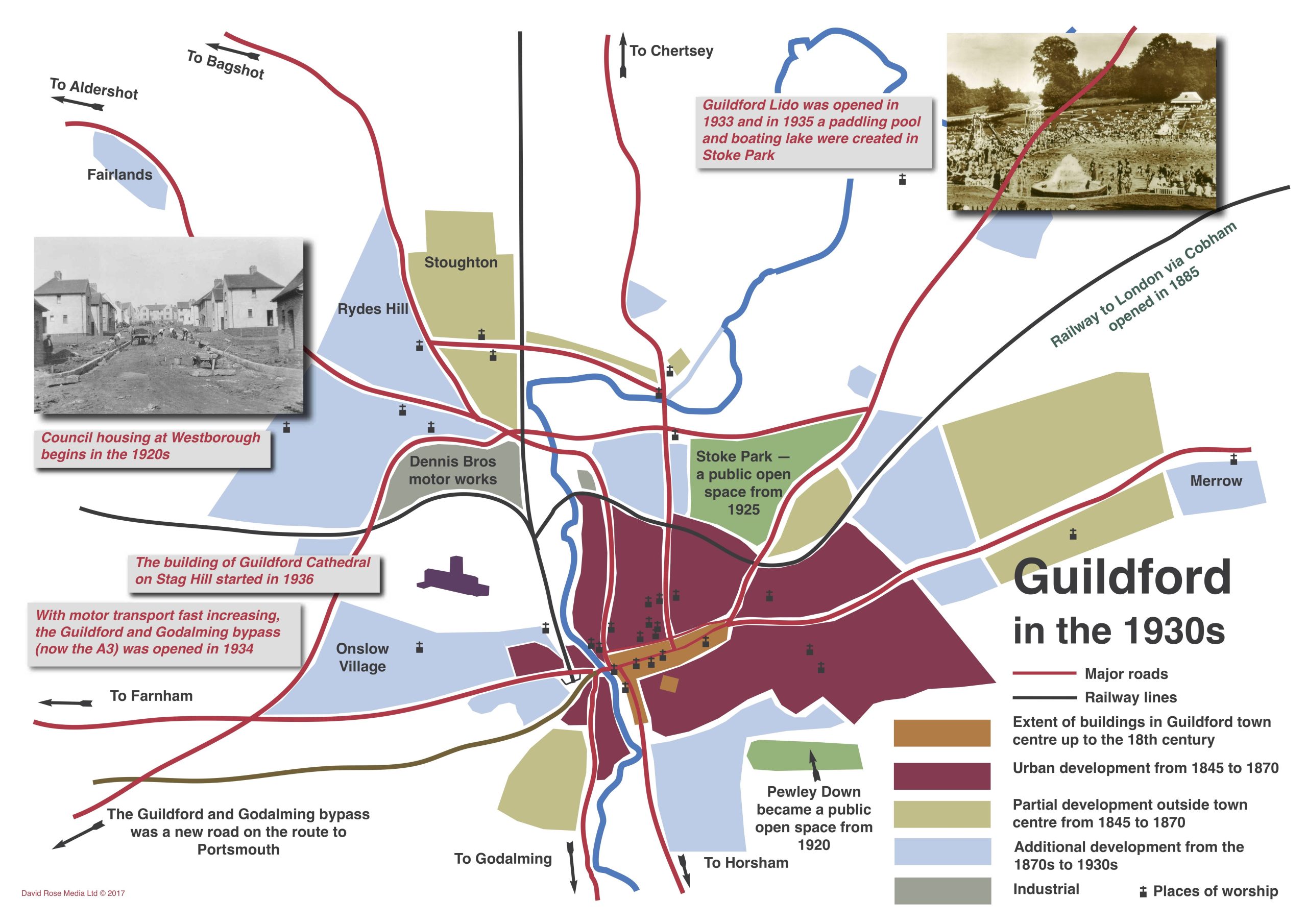
56 people heard local historian David Rose give a fascinating summary of the growth of Guildford over the centuries and more particularly since the railway arrived in 1845. David presented colour-coded diagrams of the Town at various dates which he has kindly allowed us to present in the links below.

Guildford was a tiny village until the 1750’s since when population growth has been inexorable (see David’s graph), reaching 20K by WW1 and approximately 75K by 2017. David looked at the influences of the Wey Navigations, the coaching inns, the railways, Dennis Bros, the University of Surrey, the new Royal Surrey Hospital and the Research Park in driving this growth.
He brought Guildford’s story right up to date by looking at the current developments at the Railway Station, the old CEGB site (Guildford Plaza), North Street and the old Debenhams site, finally pondering what the future holds!
Throughout his talk David presented fascinating images of Guildford, including Onslow Village, and provided background information on these. Perhaps the most interesting for me was a photograph of the Booker’s Tower on The Mount clearly visible from the Town, and that it was built in 1840 to view, in the distance, the new-fangled trains passing through Woking from 1838, several years before they arrived in Guildford.
Amongst many other interesting facts, David explained the rationale for numerous street names and areas in Guildford, aspects of architectural design, the impact of slum clearance programmes, the effect of the arrival of the Guildford and Godalming Bypass and the Ministry of Agriculture Fisheries and Food (MAFF) on Guildford and biopics of various Guildford luminaries from George Abbot to Henry Peak.
Altogether a fascinating talk from a very knowledgeable local historian.
Click here for the map showing Guildford in the 18th Century
Click here for the map showing Guildford in the 1870s
Click here for the map showing Guildford in the 1930s
Click here for the map showing Guildford in the 1960s
Click here for the map showing Guildford today




Hedgehog Highways Launch Event
Sunday 6th April 2025

We had a great turnout for the launch event of the Hedgehog Project.
Dr. Tara Pirie, Ecology and Conservation lecturer at UniS gave us a wonderful illustrated talk all about the threats our hedgehogs are facing and what we can do to help them.
Click here to see the slides used during the talk
2025 AGM and Social Tuesday 11th March 2025
We had a good turnout at this year’s AGM with about 80 people in attendance.
The official business was despatched as efficiently as possible.
The Treasurer reported a healthy balance of £5488, reflecting a net profit for the year of £500.
The Membership Secretary reported that membership had increased from 116 households last year to 341 households this year. Both reports demonstrated that the free membership policy introduced last year has been very successful.
The Secretary then oversaw a change to the OVRA rules to make the Membership Secretary an officer role, (meaning it is a 3 year position), before conducting the re-election of the Committee members. The Committee for 2025-2026 remains unchanged from last year:
Chair: Jo Rew
Treasurer: Andy Halliday
Membership Secretary: Jane Gallacher
Secretary: Alan Robins
Members:
James Heaphy
Ted Hockley
Jen Longley
Jane Shipp
Iwan Hall
Michelle Moyer
Dominic Hennesey
Natalie Fudge

Before the Chair gave her report she introduced the committee and publicly thanked them for being such a great team to work with and for all their hard work over the past year which has enabled OVRA to achieve so much.
Jo then outlined all that OVRA did last year as we seek to do our part to Strengthen Community in Onslow Village.
The achievements fall into two categories, Communication and Events.
In order to communicate all the great things going on in the local area OVRA have:
- Launched the new website, which continues to evolve.
2. Given The Village Voice an upgrade, which, thanks to generous sponsorship from Williams Property Management and Chantries and Pewleys, (and a wonderful team of deliverers), has been delivered to every home in the village each term.
3. Introduced the monthly ‘What’s on in Onslow’ mailings and the less regular ‘Local Focus Updates’.
4. Developed our social media presence with a Facebook page and instagram account, and contacts on the road WhatsApp groups around the village.

Jo reminded everyone that OVRA would love to do whatever we can to support local events and businesses so if anyone has any event or special offer they want to advertise to the local community they can email OVRA with the details. Events can be included on the website calendar and if details are received before the end of the previous month they will be included on the ‘What’s on in Onslow’ mailings.

Jo also gauged support for erecting a new noticeboard next to the Centenary Garden for use by anyone in the village community. There was a general consensus that this was a good idea and so OVRA will investigate getting planning permission.
Jo then quickly ran through the events OVRA organised last year: Easter Egg Trail, Arboretum Tours, Summer Treasure Trail, Solar Panels Talk, Advent Windows, Community Carol Singing and the Valentines Jazz Night. All the events were extremely enjoyable and well supported. Reports on all these events are below this one.
OVRA also facilitated Resuscitation and Defibrillator Training sessions, and maintained the Centenary Garden.
She then introduced the events coming up this year: Easter Egg Trail, Hedgehog Highways Launch Event, more Defibrillator Training sessions, a Local History talk, Open Gardens event, Summer Treasure Trail, talk about Nature Restoration on the Hamptons Estate, Advent Windows, Community Carol Singing and another OVRA fundraising event in early 2026.
The report finished with an invitation to get involved through various volunteering opportunities:
- Opening your garden as part of the Open Gardens Event on June 8th.
- Helping with magazine deliveries
- Becoming The Village Voice Deliveries Co-ordinator
- Helping with the annual accuracy check of the website
- Designing the occasional poster
- Helping to put up the Christmas lights outside the village hall
- Helping to maintain the Centenary Garden
- Joining the committee in the future
If you could help with any of these things email info@ovra.org.uk
The interval was an opportunity to give feedback on the various OVRA initiatives and to chat to friends and neighbours over complimentary drinks.
In the second part of the evening representatives from 5 local groups that feature on the website under the Local Initiatives menu came to share what they do and let people know how they can get involved.
First up was Judith Coslett founder of Onslow Womblers, the local litter picking volunteers. Judith explained that they meet on an adhoc basis and anyone is welcome to join them whenever they can make it. Their main incentive is to protect wildlife in the area by removing toxic and harmful litter, but clearly humans benefit too! To get involved in the group simply email OnslowWomblers@gmail.com


Next up was Rob Pickles, co-founder of the Onslow Village Toolshare Club. He explained that the scheme is a very simple way of helping people borrow tools from one another. When people join they give their phone number and list the tools they are happy to lend out. Only members can access these details but when they want to borrow something they simply ring the person who owns it and make a private arrangement. It is basically an introduction service. Click here to visit their website and sign up.
Our third speaker was Philip O’Dwyer from Care for Guildford. He explained that the charity offers lifts to appointments and a shopping service for people who would otherwise struggle to access these things. He was keen to point out that this was an unusual volunteering opportunity in that it requires no fixed commitment and people can simply volunteer when they see a request at a time that suits them. The charity is entirely volunteer run and they are always keen to find more volunteer drivers, shoppers and duty officers. Please call/text/WhatsApp Care on 07782 739349 if you think you may be able to help.


Sue Clarke was next to speak. She gave an overview of the 3 volunteering opportunities offered by the Guildford Town Centre Chaplaincy. The Volunteer Chaplains offer a listening service in settings such as the police cells and the court waiting rooms. The Community Angels offer a befriending service to people going through a tough period, helping them regain their confidence and have someone to talk to. The Street Angels patrol the town centre on Friday and Saturday nights helping people who find themselves in vulnerable situations and clearing away broken bottles etc. Click here to visit their website.
Our final speaker was Charl van Graan who spoke to us about FOOTSTEPS. They provide hot meals and support to homeless and vulnerable people in Guildford town centre every Sunday and on Christmas Day. They would love to hear from people who could prepare food at home and deliver it to the hall on the Sunday, or people who could help host the meal in the hall. They would also appreciate donations of money to help finance the project. Click here to visit their website.

Jo then thanked everyone for coming and the meeting ended at 9.45pm.
Valentines Jazz Night Friday 14th February 2025


OVRA’s sold out Valentines Jazz Night was an amazing evening! The atmosphere was that of a jazz club, more than a village hall, with subdued lighting provided by strings of lights hanging on the walls, and pretty balloon decorations donated by Happy Balloons.

Emily Windham (vocals) Sam Parker (tenor sax) Russell Jarrett (guitar) Martin Pyne (drums) and Marianne Windham (Double bass) transported us into the musicals of Gene Kelly and Fred Astaire (there was space to dance!) and Ronnie Scott’s Jazz Cafe – beautiful to listen to as we ate a delicious hot meal (with allergies catered for with special meals) and moreish homemade chocolate brownies. The healthy Kombucha (donated by Holos ) got a special mention – and encouraged us to try something new. I loved the Basil and Mint version!

It was lovely to see so many people from the area come together – a feeling of real community. Tables varied in size –it was an event one could book to come to with friends, or by oneself. There was such an inclusive friendly atmosphere.
Thank you to the OVRA team for organising this – it was a wonderful evening! I am looking forward to the next community event…!
Katherine Hopwood


Click here to go to the Advent Windows Gallery
Community Carol Singing and Mulled Wine
Friday 13th December 2024

OVRA’s first ever Community Carol Singing and Mulled Wine event was a great success. Over 100 people gathered under the twinkling lights outside the Village Hall for half an hour of enthusiastic carolling. People remembered their mugs for the mulled wine and there were many fine Christmas hats on display!!
Huge thank yous go to Sarah Truman and Katherine Hopwood for leading the singing and putting together the carol sheets. Additional thanks to members of All Saints Choir who provided some oomph to our singing and made us sound rather good!
We will look forward to seeing you all again next year (and we’ll try to work out a more efficient way of serving mulled wine before then!).

Solar Panels and Heat Pumps Talk
Tuesday 17th September 2024

We had a very good attendance at our recent event about Solar Panels and Heat Pumps, which was both informative and interesting.
The Powerpoint slides from the event are available here : Solar Panels and Heat Pumps Talk
Our first speaker was Andy Gaisford from Surrey County Council. Andy outlined the ways in which Surrey CC are cutting their carbon emissions and, in particular how they are supporting homeowners to make their homes more energy efficient. These include 3 main schemes:
- Solar Together: This scheme takes some of the risk out of choosing a solar panel provider and also enables homeowners to benefit from a good deal based on a ‘bulk order’. Surrey CC invites homeowners to apply for the scheme by a certain date. Once they know the number of interested households, they ask a small number of pre-vetted and trusted installers to bid for the work. Having selected the company offering the best deal each homeowner receives a quote for installation. They have 4 weeks to decide whether or not to go ahead with the work. If they want to go ahead the installer takes over and arranges a site survey, installation and follow up. Unfortunately the date for applying for this year’s Solar Together scheme has already passed but the scheme should be running again next year.
- Home Energy Advice Team (HEAT): This is a joint project with Zero Carbon Guildford, funded by a government grant. It is an excellent first step in assessing your home’s energy efficiency. A local team of ‘Energy Champions’ have been trained up to provide in-person energy advice. They come to the property and conduct a thermal imaging survey. This is used to produce a report which gives advice on what actions to prioritise in order to cut energy usage and how to go about making the most effective changes. They may also be able to sign post people to possible grants and schemes to help with funding. This service is free of charge to eligible households but if there is enough capacity it can be offered to non-eligible households for a small fee. Click here to apply for a free survey.
Following on from the evening we asked for clarification on the criteria for eligibility. They are:
– Have off-gas main heating
– Have English as a second language in the home
– Identify as an ethnic minority
– Receive disability benefit
– Are struggling to pay energy bills (fuel poor)
– Have an Energy Performance Certificate rating of D-G (or don’t have one at all) – residents can check here: www.gov.uk/find-energy-certificate
– Live in a conservation area
However Andy pointed out that over 90% of homes in the area are eligible so it’s definitely worth applying even if you’re not sure if you’re eligible.
- One Stop Shop : This is a brand new scheme to be launched imminently by Surrey County Council. It addresses people’s concerns that the process of becoming energy efficient is ‘just too complicated’. It offers a service that provides detailed advice on the best way forward for your particular property and a co-ordinator who will work with you to organise the installations you wish to make. Click here to register your interest in this service.
Andy also gave some information about grants which are currently available for eligible households. Details of those can be found on the power point slides.
Our next speaker was Ash Mills, one of the two founders of Infinity Renewables. This is the company that has been selected by Surrey County Council for the last 2 years to fulfil their Solar Together commitments.
Ash gave us some background information about the company and its ethos. Infinity Renewables have been the installer selected by 16 Solar Together schemes in the south of the UK and have completed over 9000 installations.
He described the process from the initial survey, through installation, and then the post installation support his company provides. He explained that solar panels could be positioned on roofs in almost any orientation, but there will often be a minimum number of panels needed. He also said it was always a good idea to get bird netting fitted for any panels on sloping roofs to stop pigeons nesting under the panels and damaging them.
Whilst Infinity Renewables specialise in Solar Panels, they also fit heat pumps and are looking to develop relationships with trusted heat pump suppliers in order to expand this side of their business. Ash generously offered a £100 donation to OVRA for every new customer who approached Infinity Renewables as a result of the evening.
Our third speaker was Damon Hart-Davis, who, after a career in the techy side of finance is now doing a PhD at the University of Surrey Centre for Environment and Sustainability. Damon discovered a passion for making his home as energy efficient as possible almost 2 decades ago in an attempt to minimise both his bills and his contribution to climate change. He has been sharing his experiences and discoveries via his website ever since. His website at www.earth.org.uk makes fascinating reading! Amongst other things Damon shared his tips on combining Solar Panels with battery storage systems. He pointed out that having solar panels is no protection against power cuts if you don’t have a battery with some form of direct plug in capability. He also encouraged people to ensure the power output from their battery was at least 3kW which is the power required to boil a kettle and to be aware that an average household uses 5 -10 kWh of energy a day.
Much of his talk was based on experiences in his own home where he has been experimenting with different set ups for many years. He talked a little about heat pumps but was keen to say that if you have a working boiler it is far better for the environment to keep it until it needs replacing rather than replace it with a heat pump while it still works.
The final speaker was our own James Heaphy, an Onslow resident and OVRA committee member. James talked us through his “Journey into Solar”, from his first consideration of the pros and cons, through the installation process with Infinity Renewables, to his satisfaction with the end product. It was a very useful and reassuring overview of what the process looks like in reality and the costs involved. James finished with a case study in Canada, illustrating just what can be achieved if you really commit!
The evening finished with a Q&A panel to answer questions from the audience. There was some discussion between the panel members about the relative efficiency of the new panels versus the old, but agreement that you shouldn’t be replacing old panels for newer ones if they still work (especially if you have a good tariff for selling your electricity back into the grid – which certainly wouldn’t be matched currently). Another question related to whether you had to get permission to put up solar panels, particularly in a conservation area. The consensus seemed to be that you didn’t, especially if they were not on the elevation facing the road.
It was a fascinating evening which OVRA hopes will help people along their own energy saving journey.
Arboretum Walks 11th May 2024

On Saturday the 11th of May, in glorious sunshine, forty OVRA members were treated to a guided walk around the Onslow Arboretum. Our guides for this arboreal safari were J-P and Gareth, respectively Guilford Borough Council Tree Officer and Nature and Countryside Warden.
The walks were aimed at helping us to know this wonderful local resource better, to understand some of the challenges it’s facing and to consider how we might help the Arboretum in the future.

The Walk
Each of our two groups were treated to a one-hour tour of the arboretum, during which we were introduced to a number of the tree species from around the world that are planted there. These included:
- Whitebeam: A hardy native tree that’s adapting well to climate change. It’s one of J-P’s favourite trees.
- Hornbeam: Meaning “Hard Wood”. It’s the hardest wood to grow in the UK.
- Horse Chestnut: With its’ wonderful flowers, but also the challenge of the leaf minor moth, which can sap its’ strength and cause smaller conkers to be formed.

- Pride of India: With its’ lovely lantern shaped seed pods, and the interesting fact that it’s actually Chinese, not Indian.
- Foxglove Tree: Which is struggling to adapt to our thin chalky soils and may need to be removed.


- Juniper: Which is slowly dying, but putting on a fantastic display of colour as it does. One walker called it the “Rainbow Tree”.
- Handkerchief Tree: With its’ wonderful large white flowers. We were a bit late arriving, as it’s at its’ best in April.


Along with the Lime , , Mountain Ash, Sequoioideae (Redwoods), Sweet Chestnut, Noble Fir, and Eucalyptus trees, among many others.

The Health of the Arboretum
J-P explained some of the challenges facing our Arboretum’s trees. That they need to survive in our climate and on thin chalk soils, despite coming from all over the world. Pollution from the A3 was hard for some of the trees to cope with, while climate change and recent wetter springs suited some trees which were thriving, but were stunting others. Overall, our tree officers think that the Arboretum is due a bit of a refresh, 20 plus years after the original plantings. With some trees needing to come out, as they are in poor health, other new trees being planted and a general tidy up to give the trees the space and air they need to thrive.
The Meadow

Gareth took over at this point and explained what a unique and precious landscape our small patch of meadow was, and how it significantly boosted the biodiversity of Onslow Village. From explaining the difference between Bulbous and Meadow Buttercups, one of which is “a bit of a brute” according to Gareth, to painting a picture of an English countryside that used to look like our meadow, before mechanised farming, fertilisers and the production of silage eradicated nearly all the meadow in the UK.
One of our walkers had completed his Zoology PhD at Surrey University, where he studied the differing levels of plant and invertebrate diversity in the Arboretum and on the manicured grounds of the University. It was no surprise to discover that the biodiversity in the Arboretum was many times higher than the University. Clearly Nature likes to be left alone and doesn’t mind a bit of an unkempt look at times.

Future Plans
Gareth and J-P would really like to set up a local group of volunteers to help look after the Arboretum, be that by clearing overgrowth, pruning, mulching or simply litter picking. They would also like to explore the possibility of planting a “Community Orchard” on some of the open ground alongside Manor Way.
Our walkers were generally enthusiastic about these ideas. J-P and Gareth will write to OVRA soon, to set out their thoughts and to seek the support of local residents. We will pass this message on, and hopefully help establish a group that helps the Arboretum flourish for many years to come.
Our special thanks go out to J-P and Gareth for sharing their time, knowledge, and enthusiasm with us. It really was a great morning in the sun.
James Heaphy
OVRA Committee Member
Easter Egg Trail 2024

Jubilee/Centennial Garden Working Party
13th April 2024

A group of the four of us weeded , restocked and tidied the Jubilee garden on Saturday 13th April.
Our main task was tackling the hundreds of sycamore saplings that had seeded themselves. We planted some snowdrops and Lily of the valley plus some other native plants which were kindly donated from a members garden.
We were very lucky and had a lovely sunny morning. People passing stopped and chatted and said how much they enjoy sitting and admiring the garden.

Even a Blackbird couple appreciated our work and the uncovering of a few tasty worms!
We completed our morning with a well earned coffee and cake at Georgies cafe.
If anyone would like to help (there is no commitment to come regulary ) please contact myself Janet Hockley via OVRA .
